What Ceramic Coatings Actually Do — and What They Do Not
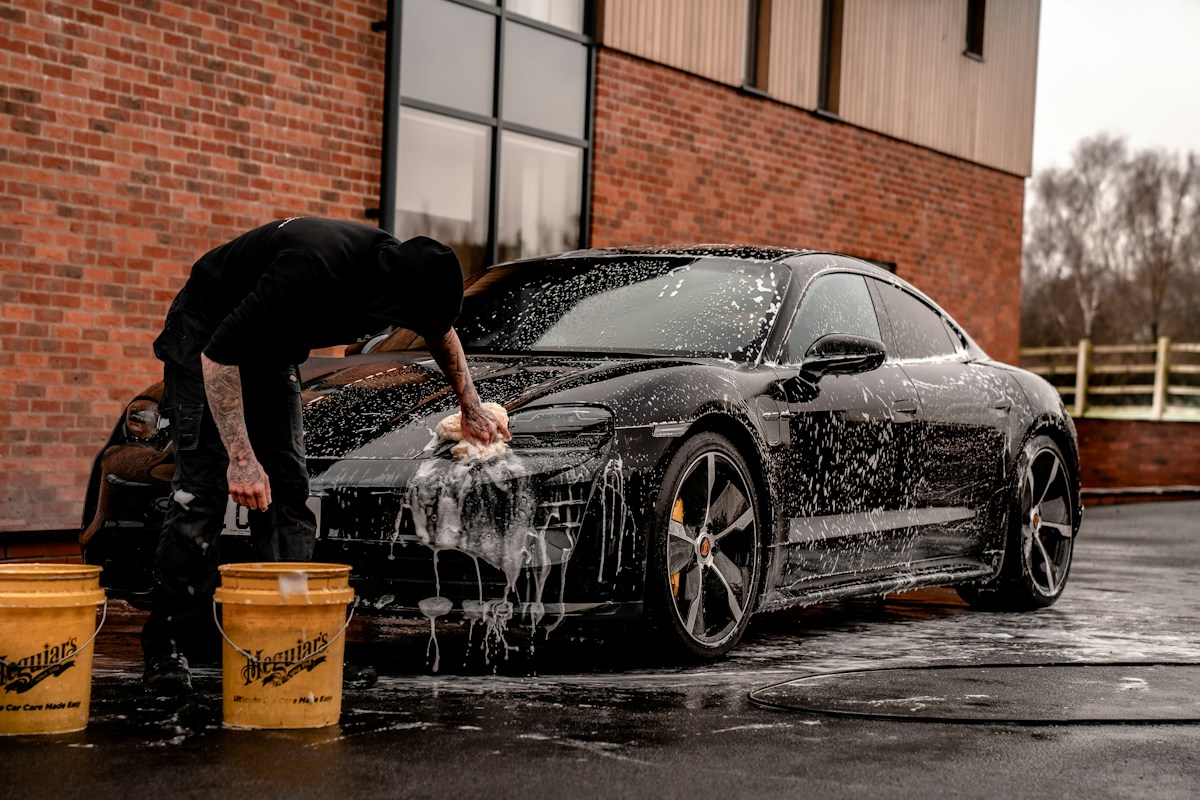
If you have shopped for a ceramic coating in the last few years, you have probably heard claims that range from "lifetime warranty" to "your car will never need waxing again" to "it is bulletproof." None of those are exactly true, and the gap between marketing language and real product behaviour is wide enough to drive a foam cannon through.
Here is what a ceramic coating actually does on a car, based on the chemistry rather than the brochure.
What It Is
A ceramic coating is a clear liquid polymer — typically silicon dioxide (SiO₂) suspended in a solvent — that bonds chemically to the clear coat on your car. When it cures, it forms a thin, glass-like layer over the paint that is harder than the clear coat itself.
That is the whole product. Nothing more exotic, nothing less.
What It Actually Does
1. Adds hydrophobicity. Water beads off. This is the most visible effect and the one most coatings are marketed on. Bug splatter rinses off easier, rain sheets off the windshield, dirt has less to grip to.
2. Adds gloss. A properly applied coating deepens the existing finish. It does not change the colour, but it makes the paint look wetter and more saturated.
3. Adds chemical resistance. Bird droppings, tree sap, and road salt — all of which etch unprotected clear coat — sit on top of the coating instead. If you rinse them off within a reasonable window (hours, not weeks), the paint underneath is unaffected.
4. Adds light scratch resistance. Specifically, the 9H hardness rating refers to a pencil hardness scale, not Mohs. A 9H coating resists fine scratches from improper washing technique better than bare clear coat does. It does not resist rocks. It does not resist a key. It does resist the kind of swirl marks a one-bucket wash creates.
What It Does Not Do
It does not stop rock chips. Highway rock chips need paint protection film (PPF), which is a clear urethane wrap. Ceramic coatings are too thin to absorb impact.
It does not eliminate maintenance washing. Even the best coating gets dirty. You wash it less often, and washing is easier, but the car still needs a proper hand wash to maintain the coating's hydrophobic properties.
It does not last "forever." "Lifetime" coatings exist, but the lifetime refers to the chemical bond, not the surface performance. Hydrophobicity gradually degrades as soaps, UV, and contaminants work on the surface. A two-year coating performs at the same level as a lifetime coating for the first two years — the lifetime version just has more polymer to wear through.
It does not fix swirl marks. If your paint already has swirl marks, a coating locks them in. The right sequence is correction first (a polish that removes the scratches), then coating.
How to Tell if You Need One
You probably want a ceramic coating if:
- You park outdoors and want bird droppings and sap to be easier to remove
- You hand-wash your car and want washes to take half as long
- You want the paint to look noticeably wetter and more saturated
- You plan to keep the car at least three years
You probably do not need one if:
- The car already has swirl marks and you do not want to pay for correction first
- You only ever take it through tunnels (the coating will be worn off in months)
- You live in a garage and the car never gets dirty anyway
- You are planning to trade the car within a year
What the Tier Differences Actually Mean
Most reputable coating brands sell two-year, five-year, and lifetime (typically eight-to-ten-year functional) products. The chemistry is similar across tiers; what changes is the number of layers, the thickness of each layer, and the warranty.
Two-year: single layer, basic SiO₂. Functional hydrophobicity for ~24 months.
Five-year: double layer, typically with a topper coat. Functional hydrophobicity for ~5 years. The sweet spot for most daily drivers.
Lifetime: triple layer with a graphene or fluorine-doped topper in some products. Functional hydrophobicity for 8-10 years if maintained properly. Better suited for garage-kept enthusiast cars.
What the Prep Matters More Than the Coating
The single biggest factor in coating longevity is the prep work before application. Paint correction, IPA wipe-down to remove polishing oils, a contaminant-free environment during cure — all of that is what determines whether a coating actually bonds for the rated lifespan.
This is why a five-year coating from a careful detailer often outperforms a lifetime coating done in a rushed shop. The chemistry is the smaller half of the equation.
If you are considering a coating, ask the detailer about their prep process before you ask about the brand. The brand matters less than you think. The hours of correction and decontamination matter more.
Ready to Stop Driving to the Car Wash?
For every car we wash, we donate one toy to CHU Sainte-Justine. Book in under a minute.
Book Now